


It is very important to only burn dry wood. Who wants to buy water? It puts fires out. Ignore the bags of wood you sometimes see for sale at petrol stations and stores that are packed in plastic and with condensation dripping off the bag. Some unscrupulous firewood producers simply chop up fresh unseasoned timber, bag it and sell it, knowing that they will probably never meet the purchaser.
Good firewood producers source their logs and then stack them to air dry for at least a full year. They then process them in to logs and in to a shed where they can dry further. Only then are they fit for bagging and selling to the public.
Contrary to some common misconceptions, properly seasoned Conifer logs make excellent fuel and are perfectly safe to burn. The notion that Pine or Spruce might be dangerous or create more creosote than other wood types is an old wives’ tale. Tar and creosote building up in chimney linings is generally the result of burning wet timber. When seasoned properly, Conifer logs burn hotter and faster than denser hardwoods and are ideal for wood burning stoves. All open fires should have a fire guard in front of them for safety and all sources of flame should be guarded sensibly.
How to light an open fire or stove
The simplest and most environmentally friendly way to light a fire is to first crumple up a few sheets of an old newspaper on the grate or use a cube or two of our Eco-Friendly firelighters. Then spread a handful of Logon kindling over the paper/firelighter. On top of these, place smaller sticks and logs and then light the fire at the base. When lighting a stove, make sure the vents are fully open and the doors closed once the fire is lit. In a few minutes after lighting, the kindling and small logs will be blazing. Then add a few standard Logon Logs and once they are burning the vents on the stove can be turned down to provide long lasting and cheerful warmth. If you have an open fire the same applies but always take care with an open fire to have a fire guard in place if leaving a room unattended. Paper and kindling and logs come from sustainably managed woodland. Far cleaner and kinder to the environment than oil based firelighters or firelogs.
If you burn wet or green wood, the heat produced by combustion must dry the wood before it will burn, using up a large percentage of the available energy in the process. This results in less heat delivered to your home, and gallons of acidic water in the form of creosote deposited in your chimney. This can eat through the chimney lining and cause significant damage. Don’t forget, this will also increase the risk of a chimney fire, which can be dangerous, and is an expensive operation if the fire service has to be called out.
The problem is that as wet wood burns slowly, with little heat, the chimney flue does not get a chance to warm up. There is little draw (air moving up the chimney) which doesn’t help the combustion, and the flue remains a cold surface on which the creosote condenses. Dry wood will burn hot – heating up the flue, creating a fast draw, and shooting the smaller amount of vapours out of the chimney before they get a chance to condense.
Best Type For Burning

Some types of tree make better firewood than others. In general ash, oak, beech, birch, sycamore, hornbeam are all first class firewoods. All Conifers such as pine burn very hot when properly air dried and are more suited for Wood Burning Stoves and Gasifiers. Alder, willows and poplars have traditionally been considered poor firewoods due to their high moisture content and tendancy to smoulder in an open fire. However modern stoves are so efficient that they will burn any timber provided it is dry and willow is now being grown specifically as a fuel crop for making wood chip and pellets.
Here is more information complements of SEI
The Science Bit
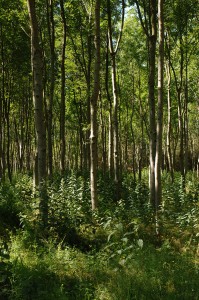 Think of firewood as solar energy stored in trees. Yes, wood heating is good for the environment. Did you know that by heating your house with wood or burning wood in your fireplace, you are taking a stand in favor of the environment? It’s true, heating your home with wood does not contribute to the greenhouse effect the way fossil fuels like oil, gas and coal do. When oil, gas and coal are burned, carbon that has been buried within the earth for tens of thousands of years is released in the form of carbon dioxide, a by-product of combustion. The result is an increase in the atmospheric concentration of carbon dioxide, the main cause of the greenhouse effect.
Although carbon makes up about half the weight of firewood and is released as carbon dioxide when the wood is burned, it is part of a natural cycle. A tree absorbs carbon dioxide from the air as it grows and incorporates this carbon in its structure. When the tree falls and decays in the forest, or is processed into firewood and burned, the carbon is released again to the atmosphere. This cycle can be repeated forever without increasing atmospheric carbon. Heating with wood, therefore, does not contribute to the greenhouse effect. Moreover, when wood energy displaces the use of fossil fuels, the result is a net reduction in greenhouse gas emissions.
Wood is a natural fuel, and by using it, you stay in touch with the earth’s natural cycles. You also gain an awareness of the environmental impacts of your energy use.
When you buy Irish firewood, the money you spend does not go to a large company outside your locality, region or even province. It tends to stay close by, circulating within your community and strengthening the local economy. And there are few things more satisfying than building a natural wood fire on your hearth, then sitting back to delight in its beauty and soak up its warmth. You can feel good about heating with wood in several different ways.